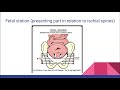
Fetal station measures where the baby's presenting part (usually the head) is located in the pelvis relative to the ischial spines, bony landmarks that serve as the zero point. This measurement helps healthcare providers gauge how far the baby has descended and when delivery is imminent.
How Fetal Station is Measured
Fetal station is recorded in centimeters above or below the ischial spine line:
- Zero station: The presenting part is at the level of the ischial spines. This is called engagement, meaning the baby has entered the pelvic inlet. For first-time mothers, this often occurs around 38 weeks (also known as "lightning"). For women who have given birth before, it may happen during labor. Understanding Fundal Height Measurement: Maternity Nursing Review for NCLEX can further help track fetal growth and position during pregnancy.
- Negative numbers (e.g., -1, -2, -3): The presenting part is above the ischial spines. This means the baby is still high in the pelvis and not yet ready for birth.
- Positive numbers (e.g., +1, +2, +3, +4, +5): The presenting part is below the ischial spines. As the number increases (toward +5), the baby is descending and birth is near. At +4 or +5, the baby is crowning and delivery is imminent.
Quick Memory Trick
- Positive numbers = a "plus" for mom because baby is about to be born.
- Negative numbers = still some time before meeting baby.
Example Quiz (from the video)
- A: Presenting part at -3 (3 cm above ischial spines).
- B: Presenting part at +2 (2 cm below ischial spines).
Why It Matters
Understanding fetal station tells you when the baby is engaged, when labor is progressing, and when to prepare for delivery. For a deeper look at early pregnancy milestones, review the Comprehensive Guide to Human Blastocyst Implantation Process. It's a critical part of monitoring labor and ensuring a safe birth.
Tip: After watching, take the free quiz to test yourself on fetal station concepts! Refresh your knowledge of key terms like gravida and para with our guide on Nursing 351 OB Terminology: Gravida, Para, Trimester & Abbreviations.
hey everyone it's sarah thread sterner sorry and calm and in this video we're going to talk about fetal station and as
always whenever you get done watching this youtube video you can access the free quiz that will test you on this
content so let's get started what is fetal station well fetal means baby and station means
location or position so when we take that and put that together fetal station is where the baby's
presenting part is located in the pelvis well one the world is a baby's presenting part well it can be the head
it could be the foot or etc whatever structure is closest to the exit of the uterus now the exit of the uterus we're
talking about the cervix and we're particularly talking about the internal offs of the cervix this is like the exit
door for how that baby leaves that uterus and is born so we're talking about whatever structure is closest to
that and it's usually the head of the babies in the right position now let's talk about how fetal station is measured
well whenever we're looking at this measurement it is telling us how much really that baby has descended down in
that pelvis it's gonna tell us if the baby is engaged or if the baby is about to be born
let's us get ready to know that we need to be prepared for delivery of this baby so to help us measure it we're looking
at a specific landmark and I would remember this landmark it is called the ischial spines the ischial spines are
located in the pelvis they are bony promises that can be easily felt and what we do is we draw this pretend line
from the r is you'll spine to the left ischial spine and that's our starting point so what we're looking at are the
measurements above that ischial spine line and below that ischial spine line so the measurement is measured in
centimeters so we're gonna look at five centimeters above that is shield spine line and five centimeters below the
ischial spine line however we don't communicate that to each other like that or document we don't say five
centimeters to centimetres instead when we're talking about this fetal station we refer to it
in - numbers and plus numbers so for instance if the baby's presenting part is above this ischial spine line we
refer to it in those - numbers if the baby's presenting part is below the ischial spine line we report this as
positive or plus numbers now let's look at this illustration to help us further understand fetal station so we find our
ischial spines and you can see that in this illustration with the arrows is pointing out those bony prominences and
this is our starting point we would refer to this as fetal station 0 now there's some things I want you to
remember about fetal station 0 this is where we would refer to the baby as being engaged if they're presenting part
was located here whenever a baby is engaged this means that that presenting part has entered down into that pelvic
Inlet and it's at that issue spine line now for first-time mothers this happens around 38 weeks it's also referred to as
lightning or for your moms who've already had babies it can happen as late as whenever labor
starts so when looking at fetal station again we're looking at above that line and below that line so let's go above
that line so one centimeter above the ischial spine would be referred to as minus one a two centimeter measurement
above that line would be minus two and so forth until we get up to five now whenever we're looking below that line
the numbers are referred to as plus numbers so whenever we're talking about one centimeter below that line it would
be plus one two centimeters below plus two three centimeters plus three now whenever we getting start getting into a
fetal station of plus four plus five this is lighting us no.2 baby is held to be born and you want to be
prepared for delivery now how can you keep this plus and minus numbers right well how I like to think of it is like
this okay so we have our issues funds that is our landmark where we're starting at that's fetal station zero so
whenever we start getting into the plus numbers that is a good thing that's good for a moment because she's about to meet
baby baby is about to be born so that is a plus however whenever we're in those minus numbers we still have
some time before we can meet the baby so it's above that that means baby still more in that pelvic area and isn't ready
to make its entrance yet so hopefully if I can help you keep that straight now quickly let me quiz you on fetal station
okay so we have this illustration here look at a what would the fetal station be for a if we have the babies
presenting part at that a line well let's look at the ischial spine we know that starts at zero we're going above
the line so we're dealing with - numbers so we would count up that's about three centimeters so that would be minus three
okay so let's look at B what would be B what would the fetal station be there if the baby's presenting part was there
well if she'll spawn again we know that is zero so we're gonna count down because we're looking at below that line
so we're hitting the plus numbers because remember once baby starts getting down in this area that's a plus
sign for mom because she's about to meet her baby so we have one two that's two centimeters so it would be plus two
fetal station okay so that wraps up this review over fetal station and don't forget to access the free quiz that will
test you on this content
Fetal station measures the position of the baby’s presenting part (usually the head) in relation to the ischial spines, which are bony landmarks in the pelvis. It is recorded in centimeters above (negative numbers) or below (positive numbers) the zero point (ischial spines). This measurement helps healthcare providers track how far the baby has descended, determine if labor is progressing, and predict when delivery is imminent.
Zero station indicates that the baby’s presenting part is at the level of the ischial spines, a milestone called engagement. This means the baby has entered the pelvic inlet. For first-time mothers, engagement often occurs around 38 weeks (known as 'lightning'), while for women who have given birth before, it may happen during active labor.
Negative numbers (e.g., -1, -2, -3) indicate the baby is above the ischial spines, meaning the baby is still high in the pelvis and not ready for birth. Positive numbers (e.g., +1, +2, +3, +4, +5) show the baby is below the ischial spines, approaching delivery. At +4 or +5, the baby is crowning, signaling imminent birth.
Think of positive numbers as a 'plus' for mom because the baby is about to be born, indicating closer delivery. Negative numbers represent 'minus' time, meaning there’s still time before meeting the baby. This simple association helps quickly interpret whether labor is progressing or if the baby is still high in the pelvis.
For first-time mothers, engagement (zero station) often occurs around 38 weeks, known as 'lightning,' before labor begins. In contrast, women who have given birth before may experience engagement only during active labor, as their pelvic muscles are more relaxed. This variation affects when healthcare providers expect labor progression.
Delivery is imminent when the fetal station reaches +4 or +5, indicating the baby’s presenting part is well below the ischial spines and crowning. At this stage, the baby is visible at the vaginal opening, and the mother should prepare for immediate birth, often within minutes.
Understanding fetal station allows healthcare providers to assess when the baby is engaged (zero station), track descent during contractions (increasing positive numbers), and decide when to push. It also helps predict labor duration and identify potential delays (e.g., slow descent to negative numbers). Regular monitoring ensures safe delivery and timely interventions if needed.
Keep this summary
Save it to LunaNotes and it becomes a real note in your library — editable, searchable, and ready to turn into flashcards or a diagram. Free to start.
Save to LunaNotesOr summarise for another video.
This summary and transcript were automatically generated using AI with the Free YouTube Transcript Summary Tool by LunaNotes.
Related summaries
Stages of Labor, Cervical Change & True vs False Labor Explained
Understand how to differentiate true labor from false labor and learn the four stages of labor. This comprehensive guide covers key assessments like dilation, effacement, and station, plus signs of approaching labor for nursing students and healthcare professionals.

Fundal Height Measurement: Maternity Nursing Review for NCLEX
Master fundal height measurement for maternity nursing exams and the NCLEX. This review covers key landmarks, expected measurements during pregnancy (12-40 weeks), and postpartum involution, including commonly tested scenarios.

Intrapartum Nursing: Labor Stages, EFM Interpretation, and OB Emergencies
This comprehensive lecture summary covers essential intrapartum nursing concepts including true vs. false labor assessment, the four stages of labor with their phases, fetal heart rate monitoring interpretation (baseline, variability, accelerations/ decelerations), and critical obstetric emergencies like cord prolapse, shoulder dystocia, and amniotic fluid embolism. A must-review for nursing exams and clinical practice.

Intrapartum Assessment & EFM Interpretation: Focused Nursing Guide
This mini-lecture covers the five essential focused assessments for intrapartum patients: pain, contractions, leaking of fluid, vaginal bleeding, and fetal movement. Learn how to subjectively and objectively evaluate each component, including a practical palpation trick to gauge contraction intensity, and understand the critical importance of fetal movement as an indicator of fetal oxygenation.

Fetal Heart Tone Monitoring: Accelerations & Decelerations Explained
Learn the essentials of fetal heart tone monitoring, including normal heart rate ranges and how to interpret accelerations, early, variable, and late decelerations. This guide covers causes, nursing interventions, and key differences between monitoring types to help assess baby's status during labor.
Most viewed summaries

A Comprehensive Guide to Using Stable Diffusion Forge UI
Explore the Stable Diffusion Forge UI, customizable settings, models, and more to enhance your image generation experience.

Kolonyalismo at Imperyalismo: Ang Kasaysayan ng Pagsakop sa Pilipinas
Tuklasin ang kasaysayan ng kolonyalismo at imperyalismo sa Pilipinas sa pamamagitan ni Ferdinand Magellan.

Mastering Inpainting with Stable Diffusion: Fix Mistakes and Enhance Your Images
Learn to fix mistakes and enhance images with Stable Diffusion's inpainting features effectively.

Pamamaraan at Patakarang Kolonyal ng mga Espanyol sa Pilipinas
Tuklasin ang mga pamamaraan at patakaran ng mga Espanyol sa Pilipinas, at ang epekto nito sa mga Pilipino.

How to Install and Configure Forge: A New Stable Diffusion Web UI
Learn to install and configure the new Forge web UI for Stable Diffusion, with tips on models and settings.
Found this summary useful?
Take it with you. One click puts it in your own LunaNotes library.
Save to LunaNotes