
Introduction
Hess's Law is a fundamental principle in thermodynamics, describing how the total energy change of a chemical reaction is independent of the path taken to achieve that change. This insightful concept simplifies our understanding of enthalpy changes in chemical reactions, whether they happen in one step or multiple stages. In this article, we’ll explore Hess's Law in detail, including its application in calculating the heat of reactions using standard heats of formation.
What is Enthalpy?
Enthalpy (H) is a thermodynamic property that reflects the total heat content of a system. It’s often associated with heat energy changes that occur during chemical reactions. Understanding enthalpy is crucial in experiments and processes that involve heat transfer, such as combustion, synthesis, and thermochemical calculations.
Definition of Enthalpy
- Enthalpy Change (ΔH): The amount of heat released or absorbed during a reaction at constant pressure.
Understanding Hess's Law
Hess's Law states that the total enthalpy change (ΔH) in a reaction is equal to the sum of the enthalpy changes for the individual steps involved, regardless of the number of steps or the pathway taken. It emphasizes that enthalpy is a state function; that is, it depends only on the initial and final states and not on the path taken between them.
Key Points of Hess's Law
-
Path Independence: The total energy change is the same, no matter how many steps a reaction takes.
-
Heat of Formation: The standard heat of formation (ΔH°_f) is the change in enthalpy when one mole of a compound is formed from its elements in their standard states.
-
Mathematical Representation:
[ \Delta H_{reaction} = \sum \Delta H_{f (products)} - \sum \Delta H_{f (reactants)} ]
Applying Hess's Law to Chemical Reactions
To understand how to use Hess’s Law practically, let’s examine how we can calculate the heat of reaction using heats of formation.
Example 1: Reaction of Ammonia
Consider the reaction:
[ A + B \rightarrow C + D ]
We want to determine ΔH if we know the heats of formation for A, B, C, and D.
-
Look Up Heats of Formation: Using a reference table for standard heats of formation, we can find:
- ΔH°_f(A)
- ΔH°_f(B)
- ΔH°_f(C)
- ΔH°_f(D)
-
Apply Hess's Law: [ \Delta H = \Delta H_{f,C} + \Delta H_{f,D} - \Delta H_{f,A} - \Delta H_{f,B} ]
Example 2: Combustion of Propane
Let’s consider a practical example using propane. When propane combusts, it reacts with oxygen to produce carbon dioxide and water. The chemical equation is:
[ C_3H_8 + 5 O_2 \rightarrow 3 CO_2 + 4 H_2O ]
-
Heats of Formation:
- ΔH°_f (C3H8) = -104.7 kJ/mol
- ΔH°_f (O2) = 0 kJ/mol (elemental form)
- ΔH°_f (CO2) = -393.5 kJ/mol
- ΔH°_f (H2O) = -285.83 kJ/mol
-
Applying Hess’s Law:
- Calculate heat of products: 3 * (-393.5) + 4 * (-285.83)
- Calculate heat of reactants: 1 * (-104.7) + 5 * 0
-
Final Calculation:
- Total heat for products = -1,277.49 kJ
- Total heat for reactants = -104.7 kJ
- Thus, [ \Delta H = -1,277.49 - (-104.7) = -1,172.79 ]
Example 3: Heat Release Calculation
Now, let’s say we’re given 33 grams of propane, and we want to find out how much heat is released:
-
Calculate Moles of Propane:
- Molar mass of propane (C3H8) = 44 g/mol.
- Moles of propane = 33 g / 44 g/mol = 0.75 mol.
-
Using Heat of Reaction:
- Energy from 1 mole = -2,219 kJ
- For 0.75 mol: 0.75 * (-2,219 kJ) = -1,664.25 kJ.
Conclusion
Hess's Law is a powerful tool in thermochemistry, providing a simple yet effective way to calculate the heat of reactions based on standard heats of formation. This concept is essential in fields such as chemistry, engineering, and environmental science, where understanding energy changes in reactions is vital. By mastering Hess’s Law and the calculations of enthalpy changes, one can predict the heat released or absorbed in chemical reactions accurately. Understanding these principles not only aids in academic pursuits but also enhances practical applications in real-world chemistry and engineering scenarios.
Now that we know a little bit about the formation and enthalpy change, and what enthalpy is, we can talk a little bit about Hess's Law.
And what this tells us is that the energy change of a process is independent of how we get from one state to another. And really, that's a by-product of the fact that
energy is a state variable. Whether we're talking about enthalpy or internal energy, they're state variables.
And we've talked multiple times that it's independent of how many steps it takes to get there, or what path you happen to take.
But how is that useful to us when we're dealing with everyday reactions? So let me just make up some reaction where I have A plus B
yields, oh, I don't know, let's just say this yields C plus D. And I wanted to figure out what was the change in
enthalpy of this reaction? Or essentially, how much heat is absorbed or released by this reaction.
I don't know what it is. I haven't measured it. And all I have are the heats of formation.
So all I know is, how do you go-- so I know the heat of formation of A-- so let me call that the heat of formation.
Remember, H isn't for heat. Even though we kept calling it heat of formation, it's actually the change in enthalpy.
And it's the standard change in enthalpy. But the change in enthalpy we know as heat. So it's heat, change in enthalpy of formation was the
same thing as heat of formation. This little naught sign tells us it's a standard heat the formation.
We can look up that in a table, and let's say that that's some number. And then we have our heat of formation of B-- delta heat of
formation, let me call it, of B. This Is heat of formation of A, and it's a standard heat of formation.
And we could look up in a table that heat of formation of C, which is change in enthalpy. And then the heat of formation for D.
So all of these things we can look up in a table, right? And we'll do that in a second. Now, what has Hess's law tells us is that the change in
energy, the change in-- and enthalpy is what we're measuring here-- the change in enthalpy here is independent of what we're doing.
So instead of saying this reaction, we could say hey, let's go from this reaction, and go back-- let me do it in a different color.
Let's go back to our constituent products, so kind of the elemental form of these. So you know, if this was like carbon dioxide, you'd be going
back to the carbon and the oxygen molecules. So you'd go back to the elemental form. And how much energy, or what's the change in enthalpy, as you
go back to the elemental form? The heat of formation is what you get from the element of form to A, or the elemental form to B.
So to get A and B back to the elemental form is going to be the minus of those. You're going to take the reaction
in the other direction. So this change is going to take minus delta-- the heat of, I guess, of forming A, or it could be the minus the heat
of deconstructing A, you can almost view it. And it would also be minus the same thing for B. And then, this is just the elemental form.
And now we can go from the elemental form back to the products. Because we have the same atoms here.
They're just rearranging themselves into two different sets of molecules. So now we can go back from the elemental form and go up here.
And we know what those are. We know how much energy it takes to go from the elemental form to C and D.
That's their heats of formation. So Hess's Law tells us that delta H of this reaction, the change in enthalpy of this reaction, is essentially going
to be the sum of what it takes to decompose these guys, which is the minus heat of formations of these guys, plus what it takes to reform these guys over here.
So we can just write it as delta H of formation for C plus delta H of formation for D. So the heat of formations for these guys minus these guys.
This is what it took you to get to the elemental form. So minus delta heat of formation of A, minus delta heat of formation of B.
And then you'll have the heat of the reaction. And if it's negative, we would have released energy. And if this number is positive, then that means that
there's more energy here than on this side, so we would have to absorb energy for this reaction to happen, and it would be endothermic.
So this is all abstract and everything, and I've told you about Hess's Law. Let's actually apply it to some problems.
So let's say I have this reaction right here, where I start with ammonia. And it's ammonia gas.
And I'm going to react that with molecular oxygen to yield some nitrogen monoxide, 4 moles of it, and some water. So what's the heat of this reaction right here?
So what we do, is we just look up the heats of formation of each of these. So let's just look them up.
Let's start with the ammonia. What's the heat of formation of ammonia? And it's always given in kilojoules per mole, so
they'll say to form one mole of ammonia. So to form 1 mole of ammonia-- let's look up here. This is all cut and paste from Wikipedia.
And am I starting in the gaseous or the aqueous state? Well, I think I just-- see, I'm starting the gaseous state.
I've added that G there. So ammonia in the gaseous state has a heat of formation of minus 45.9 per joule.
So what is that going-- so minus 45.9 kilojoules per mole. That's just for one mole of
ammonia, the heat of formation. It's in kilojoules. I'll just look them all up right now.
Now what's the heat of formation of oxygen? And I'm not going to look it up right now, because oxygen is in its elemental form.
So if you see something in the form that it just always takes, before you do anything to it, its heat of formation is 0.
So if you see O2, its heat of formation is 0. If you see hydrogen, if you see H2, its heat of formation is 0.
If you see carbon by itself, heat of formation is 0. Carbon in the solid state, heat of formation is 0, at standard temperature and pressure.
Now what about nitrogen monoxide? Let's look that up. I have it right here.
Nitrogen monoxide. Heat of formation. It's positive, 90.29.
And finally, what's the heat of formation of water? Well, let me see. Liquid water.
Minus 285.83. Now you might tempted to say, OK. Hess's Law says that if if we want the delta H for this
reaction, we just take this plus this, and subtract that. And you'd be almost right, but you'd get the problem wrong. Because these are the heat of formation per mole.
But we notice in this reaction, we have 4 moles of this, plus 5 moles of this, yields 4 moles of this plus 6 moles of that.
So we have to multiply this times the number of moles. So here I have to multiply this times 4, 4 here, and I have to multiply it times 4 here, and I have to multiply
it times 6 here. I don't even worry about multiplying 0 times 5, because it's just going to be 0.
So now we can apply Hess's Law to figure out the delta H of this reaction. So the delta H of this reaction is going to be equal
to, 4 times the heat of formation of nitrogen monoxide-- so 4 times 90.29, plus 6 times the heat of formation of water.
So plus, I'll switch colors, 6 times minus 285.83. And just as a side note, given that the heat of formation of nitrogen monoxide is positive, that means that you have to
add heat to a system to get this to its elemental form. So it has more energy than its elemental form. So it won't just happen by itself.
And water, on the other hand, it releases energy when you form it from its elemental form. So in some ways, it's more stable.
But anyway let me-- So these are the heats of formations of the products. And then we want to subtract out the heats of formation of
the reactants in our reaction. So here it's 4 times 45.9-- Let me make sure. It's a minus 45.9.
Right? That ammonia had a minus 45.9 heat of formation. So what did we end up with?
Let me get the calculator out. So I have-- let me make sure I put it over here. I have to be able to read it.
Well, I'll just do it off the screen, because my screen is getting filled up. So I have-- let me just do it here.
4 times 90.29 plus 6 times 285.83 negative is equal to-- so so far, we're at minus 1,353. Does that sound about right?
That looks about right. And now we want to subtract from that 4 times minus 45.9. So we want to subtract-- so minus 4 times 45.9 negative is
equal to minus 1,170. So our delta h of this reaction is equal to minus 1,170 kilojoules for this reaction.
And all we did is, we took the heat of formation of the products, multiply it times the number of moles, and subtracted out the heat of formation
of the actual reactants. There you go. Let's do one more of these.
Let's say I had some propane. I had some propane, and I'm going to combust it. I'm going to oxidize the propane to yield some carbon
dioxide in water. Well, it's the same drill. What's the heat of formation of propane?
Look it up here. It is amazing how exhaustive these lists really are. Propane is down here in its liquid state.
Heat of formation minus 104.7. So let me write that down. Minus 104.7.
Heat of formation of oxygen in its elemental state. That's how you always find oxygen. So it's just 0.
Heat of formation of carbon dioxide-- Let's see. Carbon dioxide, and as a gas, minus 393.5. And water.
We already figured that out. It's minus 285.83. So how much heat is formed when we combust one mole of
propane right here? So let's see. We have to figure out the heat of the products, the heat of
formation of the products-- so it's going to be 3 times this. Because we formed 3 moles of this. For every mole, we release this much energy.
And then plus 4 times this, and then subtract out 1 times this. So what do we get?
We get 3 times 393.5 and that's a negative, is equal to that. Plus 4 times 285.83 negative is equal to minus 2,300
kilojoules, roughly. And then we have to subtract out 1 times this. Or we could just add 104.7.
So let me just do that. So plus 104.7 is equal to minus 2,200. So here my heat of this reaction, is equal to minus
2,219 kilojoules as we go in this direction. For every mole of propane that I combust, I will actually produce this much energy on the other side.
Because this right here has roughly 2,200 less kilojoules than this side right there. So I could actually rewrite this reaction where I write
all that, and I could have added-- actually, let me do it. I could rewrite this reaction is C3H8 propane, plus 5
oxygens, yields 3 carbon dioxides plus 4 waters plus 2,219 kilojoules. That's actually what's released by this reaction.
It's exothermic. This side of the reaction has less heat than this side, and that-- it didn't just disappear.
It got released. And this is where it got released. Now sometimes you'll see a question where they say, hey.
Fair enough. You figured out the heat of this reaction. How much heat is going to be released if I were to hand
you, I don't know, let's say I were to hand you 33 grams of propane? Well, then you just start thinking, oh, well, how many
moles of propane this is. Because if I combust one mole of propane, I get this much heat.
So how many moles of propane is 33 grams? Well, how much does 1 mole weigh? The 1 mole of carbon weighs 12 grams. 1 mole of hydrogen
weighs 1 gram. So 1 mole of propane is going to be 3 times 12-- so times 3, because we have 3 carbons there and 8 hydrogens, so
times 8-- so it's going to be equal to 36 plus 88. So it's going to be 44. So this is going to be 44 grams per mole, right?
This is, let me write that down. 44 grams per mole. Now, if I give you 33 grams, how many
moles am I giving you? Well, 33 grams times, I guess we could say, 1 over 44 moles per gram-- I don't have to write the whole gram there.
And then the grams cancel. I'm giving you 33 over 44 of a mole, or I'm giving you 0.75 moles.
So if one mole produces this much energy, 3/4 of a mole is going to produce 3/4 of this. So we just multiply that times 0.75.
And you get 1,664. So times 0.75 is equal to 1,664. So if I were to give you 1 mole of propane, and I were to
combust it with enough oxygen, I'll produce 2,200 kilojoules that's released from the system. So this side of system has less energy left over.
But if I were to only give you 33 grams, which is 3/4 of a mole, then you're going to release roughly 1,600 kilojoules.
Anyway. Hopefully you found that helpful.
Keep this summary
Save it to LunaNotes and it becomes a real note in your library — editable, searchable, and ready to turn into flashcards or a diagram. Free to start.
Save to LunaNotesOr summarise for another video.
This summary and transcript were automatically generated using AI with the Free YouTube Transcript Summary Tool by LunaNotes.
Related summaries
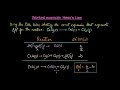
Understanding Hess's Law: A Comprehensive Guide to Enthalpy Changes
Explore Hess's Law and learn how to calculate enthalpy changes with numerical examples. Perfect for chemistry students!

Understanding the Enthalpy Change in the Formation of Methane (CH4)
Learn how to calculate the enthalpy change for methane formation using Hess's Law and combustion reactions.
Understanding Enthalpy and Heat of Formation in Chemical Reactions
Explore the concept of enthalpy and its role in chemical reactions, including heat of formation and exothermic vs endothermic processes.
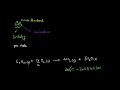
Understanding the Standard Enthalpy of Combustion: A Comprehensive Guide
Explore standard enthalpy of combustion, its calculation, significance, and applications in fuel comparison.

Understanding Bond Enthalpy: A Guide to Calculating Enthalpy of Reaction
Learn how to calculate the enthalpy of reaction using bond enthalpy concepts. Understand bonds, energy changes, and their implications!
Most viewed summaries

A Comprehensive Guide to Using Stable Diffusion Forge UI
Explore the Stable Diffusion Forge UI, customizable settings, models, and more to enhance your image generation experience.

Kolonyalismo at Imperyalismo: Ang Kasaysayan ng Pagsakop sa Pilipinas
Tuklasin ang kasaysayan ng kolonyalismo at imperyalismo sa Pilipinas sa pamamagitan ni Ferdinand Magellan.

Mastering Inpainting with Stable Diffusion: Fix Mistakes and Enhance Your Images
Learn to fix mistakes and enhance images with Stable Diffusion's inpainting features effectively.

Pamamaraan at Patakarang Kolonyal ng mga Espanyol sa Pilipinas
Tuklasin ang mga pamamaraan at patakaran ng mga Espanyol sa Pilipinas, at ang epekto nito sa mga Pilipino.

How to Install and Configure Forge: A New Stable Diffusion Web UI
Learn to install and configure the new Forge web UI for Stable Diffusion, with tips on models and settings.
Found this summary useful?
Take it with you. One click puts it in your own LunaNotes library.
Save to LunaNotes